Through this semester I have discovered a lot about my creativity. Being a marketing major, and one of the only non-GID majors in the class, I was intimidated by the thought of having to keep up with my classmates. Initially, I thought I was going to struggle through this class and not find it relevant to my studies. I soon found out that the steps in the design thinking process applied to everything I did as a marketing major. The same principles applied. As a marketing major you have to keep the client’s goals and the end users’ goals relevant in projects at work at all times or else it is meaningless. I was surprised to find that through a lot of the ideation exercises I was able to generate a lot of ideas and keep up with my classmates. Even though I might not have been as artistically gifted as my classmates, I discovered that this was because I had not practiced as much as them. I observed quick and drastic improvement in my artistic and creative ability by dedicating time every week to practice. This class will help me as I start my professional journey at the end of this academic year. I have learned that creativity takes time, patience and dedication. I will also take the principles of empathy with me when starting my career. I will also take the importance of empathy through the rest of my life, as it is an imperative life skill to have with your friends, family, and anyone else around you.
Storyboarding is a storytelling technique used to communicate a story through different panels. You mustn’t try to tell too complicated a story or a story that is too simple in these panels. There is a balance that needs to be met within the panels on a storyboard. The storyboard structure as seen below is a graphic organizer of illustrations. The order of the storyboard sections shows the sequence of events happening within the story the artist is trying to tell. Even though we are creating these storyboards in class for the first time and it may seem trivial, these are an essential element in the corporate world. Storyboards are heavily used in any graphic design field and advertising. Storyboarding is also extremely important for business presentations, whether it be internal within a company or to clients. To be able to communicate a story to your client or target audience is an essential skill in the graphic design field.
Lynda Barry is an extremely famous cartoonist, author, and teacher. Even though she is famous, Lynda Barry still uses storyboarding as the base of her work, as this is how she tells stories to many different audiences. Her process closely relates to Design Thinking and Ideation, as she describes how she draws through storyboarding with minimal planning. She lets the story flow out naturally to make sure the client understands what the story is. Since we often consume media quickly through platforms such as social media, creative ideas need to be concise and imaginative to be understood and digested. Lynda Barry finds the best way to tell a story is with the least planning and just to tell the story naturally. Lynda Barry explained her process In answering a question about her book, What It Is in an interview with Michael Dean for The Comics Journal, Barry said:
“The realization that the back of the mind can be relied on to create a natural story order. It’s not something I have to try to do, or think too hard about. If I just work every day on a particular project, it seems to begin to form itself if I keep moving my hands while maintaining a certain state of mind.”
Lynda is using the basics of Design Thinking to create her work which is extremely helpful when creating storyboards. When presenting my storyboards in our class, I found that people did not digest the stories in the same way which I had. I thought my stories were clear and concise. I found out after presenting them to the class that two of my storyboards were too simple to fit in four frames. I had one storyboard that fit well into the four frames we were given (see below) but it was just not creative. If I had thought to create these storyboards from Lynda’s perspective, I may have had a more creative story that was captivating to my audience. Like Design Thinking, you must always have the end-user in mind when creating storyboards, to make sure your work pertains to your target audience.
The
testing phase is the final stage in the Design Thinking Process. The main
framework for the testing phase is to refine, learn and solve. In the testing
phase specifically, designers need to embrace that some projects are never
finished, but some things are. For example, if a designer creates an app for
their client, it will constantly need to have updates and be innovated to stay
current with the consumer. Regardless of whether or not the projects are
ongoing or able to be finished, there will always be reflecting and learning to
create the most innovative and relevant product for your consumer. Testing can
be done through screens, launches, publishing, printing, debugging, shipping,
promoting, releasing and beta. In the testing phase, it is essential to do user
research and testing to work out issues and kinks that were not foreseen in the
prototype phase. As explained in the User
Research: What It Is and Why You Should Do It article by Ditte Mortensen, the main reasons
for user testing are, “ 1. To create designs that are truly relevant to your
users. 2. To create designs that are easy and pleasurable to use. 3. To
understand the return on investment (ROI) of your user experience (UX) design.”
The common theme as seen through all other phases of the Design Process is that
designs need to be relevant to your users and matter to them, or there is no
point in creating. Relevance is always key in Design Thinking. To create
relevant designs, User Research and Testing is very important to make sure you
are helping the consumer. It can often be hard to get effective and honest User
Research and Testing. If your User Research and Testing is not effective, it
can negatively impact your product because getting honest feedback is key to
refining your product.
One of the main reasons it has hard to get honest
feedback is that people don’t want to hurt other people’s feelings. As stated
in the article How
to Get More Honest Feedback in User Testing by the Interaction Design Foundation, “They
didn’t want to give me bad feedback, in part, because they thought it might be
hurtful to me. This remained true even when I’d told them, I wanted bad
feedback.” Feedback even when negative, is extremely helpful to designers.
Designers need to be able to hear the negative things people say and not be
insulted by negative comments. Designers need to be able to absorb this
negative information and use it to refine and improve their design. In addition
to getting nonfiltered feedback, second observers or a video recording of the session
is key to be able to reflect and get deeper feedback. Since a lot is going on
during User Testing, designers may not be able to focus and absorb all this
information. In the testing phase, you must get relevant user testing that is
honest. This information is crucial to refining during the final test phase to
get a relevant product for the consumer. Getting a relevant product that
matters to the consumer is the main objective of the whole Design Thinking
Process.
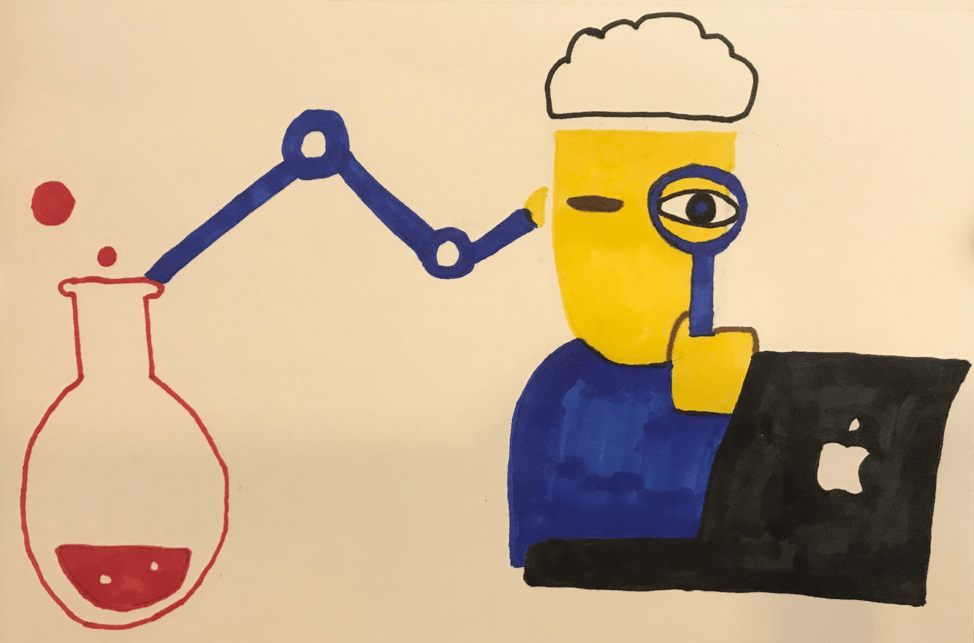
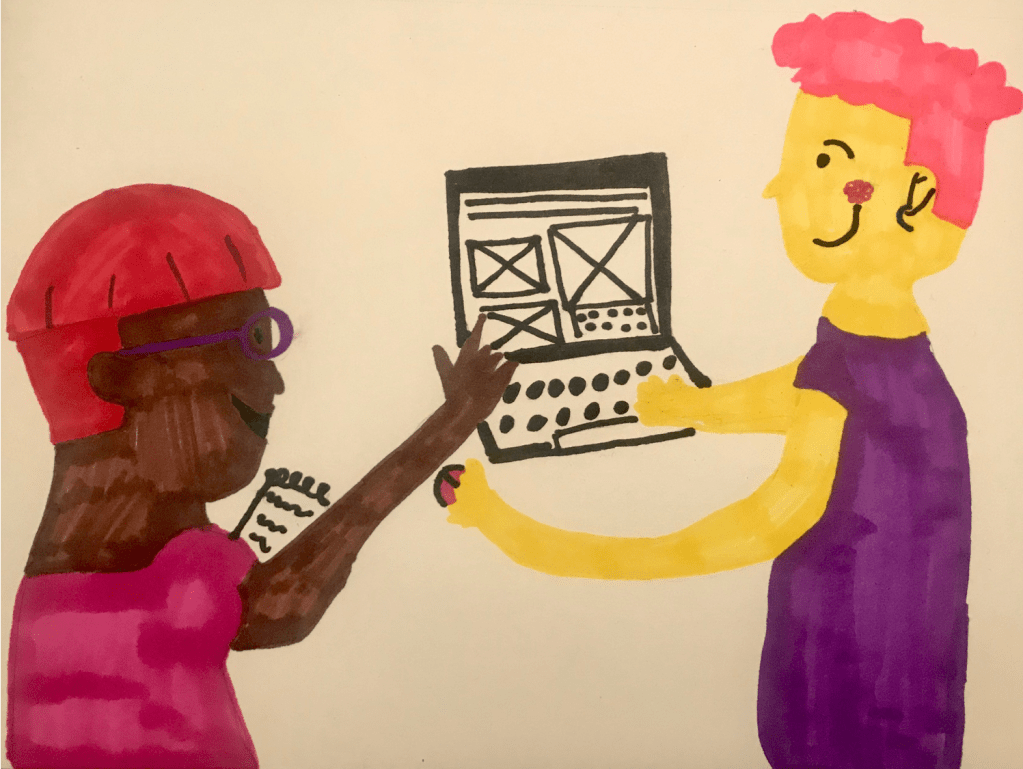
Following the Ideate phase in Design Thinking, is the Prototype phase. In the Prototype phase, designers create different varieties of prototypes. These range from paper prototypes, animatics, comprehensives, wireframes, walkthroughs, and moquettes. In this phase, you must explore, inspire and converse. During Prototyping, designers have to accept failure and make different iterations. Through making different prototypes, designers will discover different issues and improvements they can make to the model, which may require going back and revisiting phases. Commonly, unknowns will be discovered in the Prototype phase, so designers have to expect to make a lot of changes to improve their designs. Designers need to Prototype and design with the target group in mind, always empathizing with them or else the Prototypes will be useless.
In the Design Thinking: Get Started with Prototyping article by Rikke Dam and Teo Siang, they emphasize discovering the unknown through the Prototyping phase and the importance of action-oriented learning. Through action-oriented learning, you can discover exactly what you need to please the target market through prototyping and creating models. Through empathizing and prototyping you can create the best solution for the consumer. As stated by Rikke Dam and Teo Siang, “One of the most important aspects of Design Thinking is exploring unknown possibilities and uncovering unknown insights. This is the reason the discipline emphasizes learning and activities that increase the learning potential of the team.” Prototypes need to be built and fixed over and over again, to get the result that best fits the consumer’s needs, “As such, your team can iterate rapidly, modifying your test models and moving you closer and closer to the goal.” Making new iterations of the model is key to discovering the most innovative and best solution for the consumer.
Product Designer, Ian Spalter was featured on the Netflix Series Abstract the Art of Design Digital Product Design Episode. He was hired to help Instagram restructure their app and logo and prides himself in taking a lot of time in the Prototype phase. He requested three months and no questions from Instagram when prototyping and redesigning Instagram. He knows the importance of taking the time to redesign to meet the consumer’s needs. Ian Spalter also knew how to empathize with all different types of people, which he claims helps him immensely when needing to connect with the consumer in designing. Ian Spalter claimed his “empathy for people,” stemmed from him being biracial. Ian emphasizes the importance of reiterating, rewriting and redesigning to please an audience. He works for a platform that affects millions of people, so he has to make design decisions with what these people would like the best, not what he likes the best. Ian knows how to empathize so well with people that he is trusted to redesign Instagram, a global platform. Ian travels all over the world, and in this episode, he was seeing how people in Asian countries consume social media. He knows the differences in how various cultures consume media and he incorporated this in his restructuring of Instagram. Empathy is extremely important in all phases of Design Thinking, but especially prototyping. If you are not designing a prototype to solve a specific issue or interest for the target consumers, these prototypes are ultimately useless.
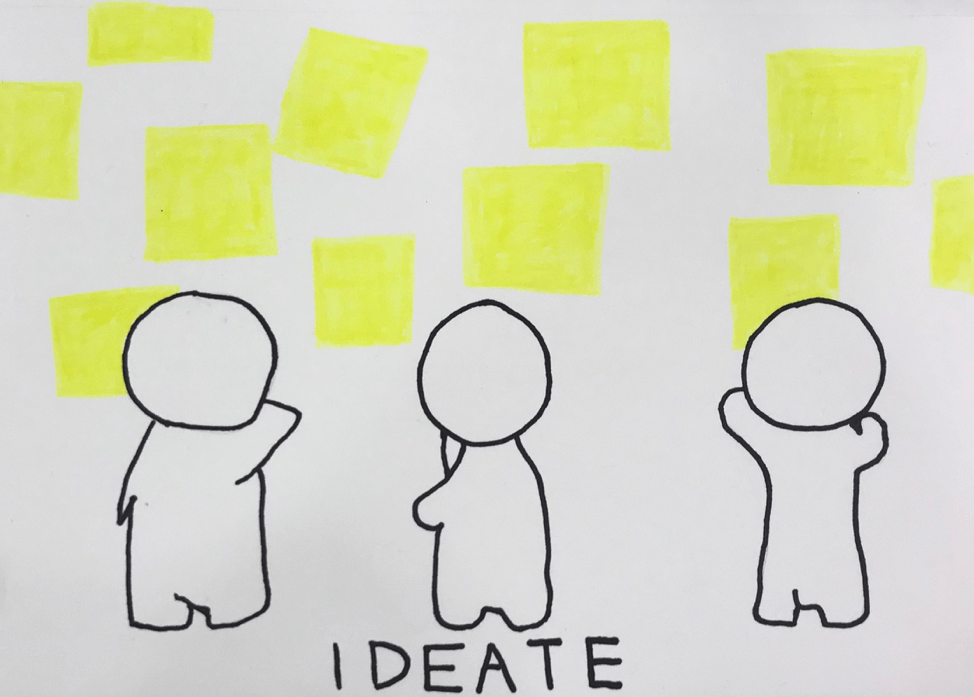
In the
Ideate phase of Design Thinking, you must generate as many ideas as possible.
During ideation, the quantity of ideas is important, and quality is not. It is
essential to get the highest volume of ideas as possible because there needs to
be diversity in your idea pool. Having diversity in ideation can spark more
creativity and innovative solutions. To achieve diversity in all of these
ideas, you have to suspend your judgments so that everyone feels comfortable
sharing every idea they come up with. It is often hard to get people to ideate
without feeling restricted or self-conscious in the ideation space. Commonly,
people do not feel creative and feel they cannot come up with new ideas. This
can be caused by creativity being ruined as a child, and people not realizing
that ideation takes time, not inspiration.
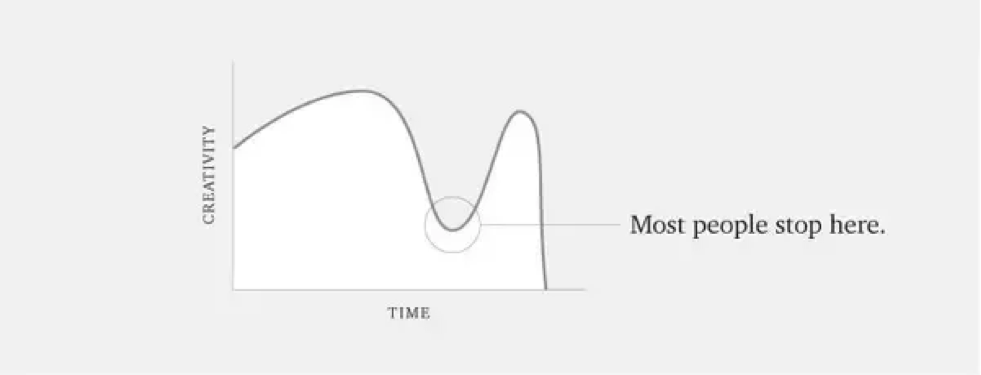
According to Stefan Mumaw in his Ideate Workshop at LinkedIn, when “weird” ideas are sparked, this is when
creativity begins to flourish and innovative ideas are generated. As seen in
the graph below, where most people stop ideating is when all the traditional
idea flows cease. It is important to push through this. To push through this it
is key to not pass judgment and record some unconventional ideas. Once the
“weird” ideas are out, it sparks creativity and encourages people to think in
different perspectives. As you can see from the graph below, the creativity peak
is after the stopping point, this is why it is so crucial to share every idea.
At this peak is where the most novel ideas are formed. In addition to reserving
judgment, it is important to establish an environment where everyone feels
comfortable and encouraged to share ideas in the ideation space.
Stefan Mumaw also made important references to his
childhood, where he believes creativity is demolished. He shared how he was the
only child in his class who raised his hand when asked, “Are you creative?”, by
the teacher. Mumaw thought to himself, “I must have been wrong.” He feels that
traditional education, where we are taught there is a certain process to obtain
only one correct answer can blunder children’s creativity. It is important to
note that the fear of being judged limits creativity. Mumaw also highlighted
that kids are amazing at ideating and always have innumerable creative ideas,
unlike adults. As a child, creativity is at its peak. Creativity must be
embraced and fostered in children. In my opinion, if this was nourished as a
child and improved upon and grown, we would be even better creators as adults
and it would not be as daunting.
In addition to our education influencing our creativity
negatively, adults find it extremely hard to be creative. They feel that people
are either born with it or cannot be creative at all. If adults had enough time
to be creative and were not as pressured by deadlines, they would have enough
time to ideate and improve themselves. Christoph Niemann in his episode Illustration in
the Abstract: Art of Design Netflix series states, “I worked under deadline
at first… I got a lot of calls out of desperation.” He further explains how
having harsh deadlines hinders the creative process, especially when you have a
lot of other issues to handle at work. He claims these circumstances can ruin,
“creators motivation,” hindering their willingness and ability to brainstorm
innovative ideas. He explains the importance of taking the time to ideate,
“Inspiration is for amateurs… professionals just go to work in the morning… it
never becomes easy.” He continued to demonstrate the importance of needing the
motivation to sit down and invest time and work hard to ideate. A Design
Thinker does not need to be inspired to ideate, they have to go to work and be
prepared to invest time to produce ideas. Time and patience are crucial factors
to have successful ideation sessions. It is a common misconception adults have
that they cannot be creative, the time just has to be dedicated to practice
ideation.
As a species, people have been programmed as test-takers,
crammers, and memorizers. Most of us have lost touch with our creative
pathways, and they have been closed over time. We all need to learn how to
reopen these creative pathways and be imaginative again, as we were in our
youth. Creativity needs to be fostered as children to develop it and grow it.
As a society, if we were to foster creativity and ideation at a young age, we
would be raising innovators. We would be able to solve more problems, and
everyone could be a creative being.
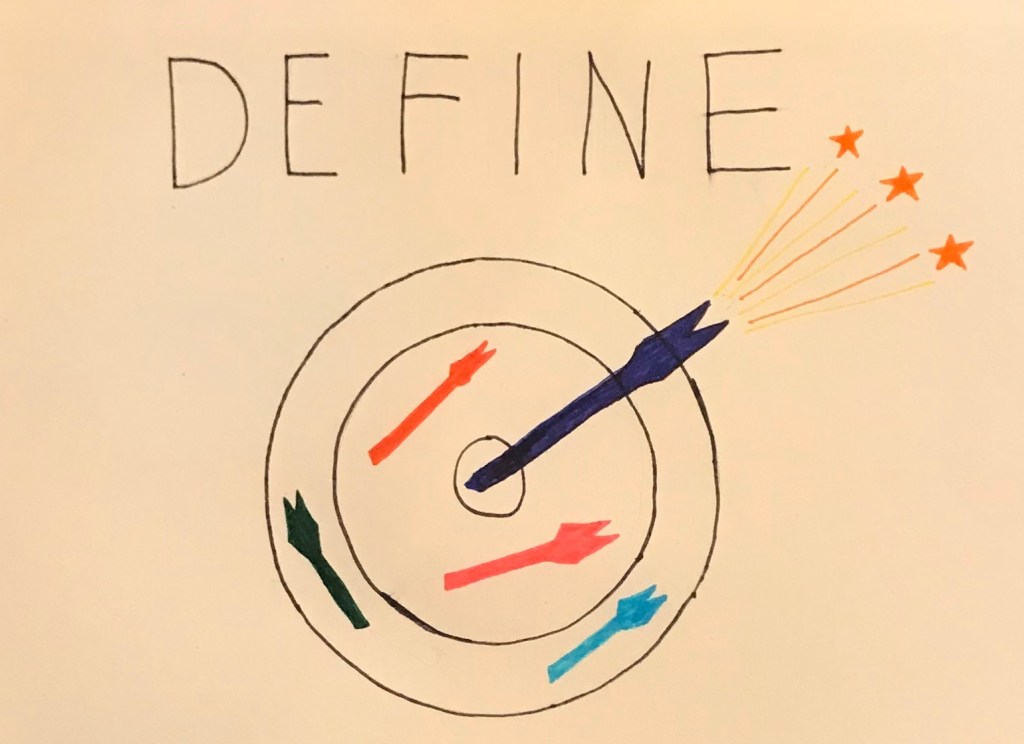
In the Define stage of Design Thinking, there is a lot of
ambiguity and repetition. In this stage, it is key to dedicate copious time to
hypothesize and define the problem for your target group. Defining the problem
is very important but takes a lot of dedication and analysis, which is why it
is often overlooked. As a designer, you should never assume you know the
problem of a target group. You have to dig deep into the lives and concerns of
your target group to see underlying issues you would not have seen from the
surface level. To dig deeper you have to unpack the information you uncovered
in the empathize step of Design Thinking.
When unpacking the information from the empathize stage,
you cannot just assume you know the problem at hand. It is imperative to leave
your judgments behind. You must not rush to define the problem since it
requires time, space and repetition. Additionally, this process is not always
linear and may require you to go back and get more data since you will be
discovering things about your target group you could have never imagined. As a
Design Thinker, you will be creating problem statements and redefining them
numerous times as we go through this process. The “how might we” mindset will
also help provide you with insights into the needs and feelings of your target
group. The needs and feelings of your target group are imperative to have a
successful product or service. If your product or service does not meet a need
or satisfy a feeling, the design is worthless to your group.
In the Project Success:
Defining the Problem video,
led by Jordan Robert she emphasized the importance of a consumer’s needs, “Need
to verify with the client you are creating what they want but it needs to be
validated with consumers or it means nothing.” Jordan Robert brought her
real-world experience working with clients and consumers to prove that
consumer’s needs are extremely important. If you are working with your client
to make something for the consumer, it’s relevance with the consumer must
always be validated. If the product or service can not be validated with the consumer
and does not help them satiate a need in their life there is no point in
designing it. It is a waste of resources to design something that does not
resonate with the consumer even if the client verifies it. If the consumer does
not need this product no consumer will purchase it, regardless of how important
it is to the client.
To meet the consumer needs, Design Thinkers need to
rework and rethink problems to create the most innovative product or service
for their clients. In the article, How
Reframing a Problem Unlocks Innovation by Tina Seelig, she explains the importance of
analyzing problems, “The simple process of asking why expands the landscape of
solutions for a problem.” Tina brings up the key point that the deeper you dig
into a problem, the more creative solutions will arise. Innovation takes time
and requires problem redefinition and analysis to define the real root of the
problem for a group. Once the real problems are explored and established,
creative solutions will be born.
In addition to using Design Thinking in the corporate
world, Design Thinking can be leveraged to solve social problems. In the Design Systems to Solve
Social Problems Video
by Nille Juul-Sørensen, he urges that, “we have to solve problems as a planet
and learn from each other.” By integrating Design Systems thinking, we can work
together as a planet to solve social problems. Nille explains the importance of
collaborating and making this shift as a planet. He explains that by working
together we offer so much more value than working separately since everyone in
the world has so many different experiences. Design Thinking can be applied to
more than just products and services. Design Thinking has the potential to
solve so many issues that impact the world but we must start looking at the
future from a design perspective. We have to keep redefining the social issues
that are present in our world today. We have to be able to look at people’s
needs in context and see the meaning behind these to decode people and their
problems. Nonprofits are already starting to hire designers to help them create
systems to solve all different types of social issues. In retrospect, if we
apply Design Thinking outside the corporate world we will be able to help
understand and solve social issues that affect all different areas of the world.
In Design Thinking, empathy is one of the most crucial stages. Empathy is one of the main concerns of design because it is difficult for people to execute. In Berkley’s, What is Empathy? article, it defines empathy as, “Emotion researchers generally define empathy as the ability to sense other people’s emotions, coupled with the ability to imagine what someone else might be thinking or feeling.” In the Empathyarticle from the Design Thinking Handbook, it explains the importance of empathy by stating, “Empathy is at the heart of design. Without the understanding of what others see, feel, and experience, design is a pointless task.” In design, you have to empathize with people to design effectively. If you do not put yourself in the shoes of others, you cannot see what the group requires. Ultimately, if you cannot determine a group’s needs and desires through empathy, your design or project could be pointless.
It is imperative to connect with your consumer and create a project for them that is impactful. A Design Thinker should start with observing the group that a product, service or experience is being designed for. Next, Design Thinkers should try to engage with the group in focus and immerse themselves in their day to day life. This way one can see how this group operates. Once a designer can understand and immerse themselves and have a context of how these people live, they can identify the desires of these people. Tactics to use for these steps include research, interviews, surveys, shadowing, documentaries, journals, and observing body language.
To summarize, qualitative and quantitative data collection is key to getting the right context in the empathize phase of Design Thinking. Furthermore, establishing feelings and needs of the individuals you are designing for is necessary for success. By immersing yourself you can find problems and pain points that this group needs solved. This provides information to be innovative and find solutions for problems they crave. You must drop all assumptions and judgments you have for the group and discover issues for yourself.
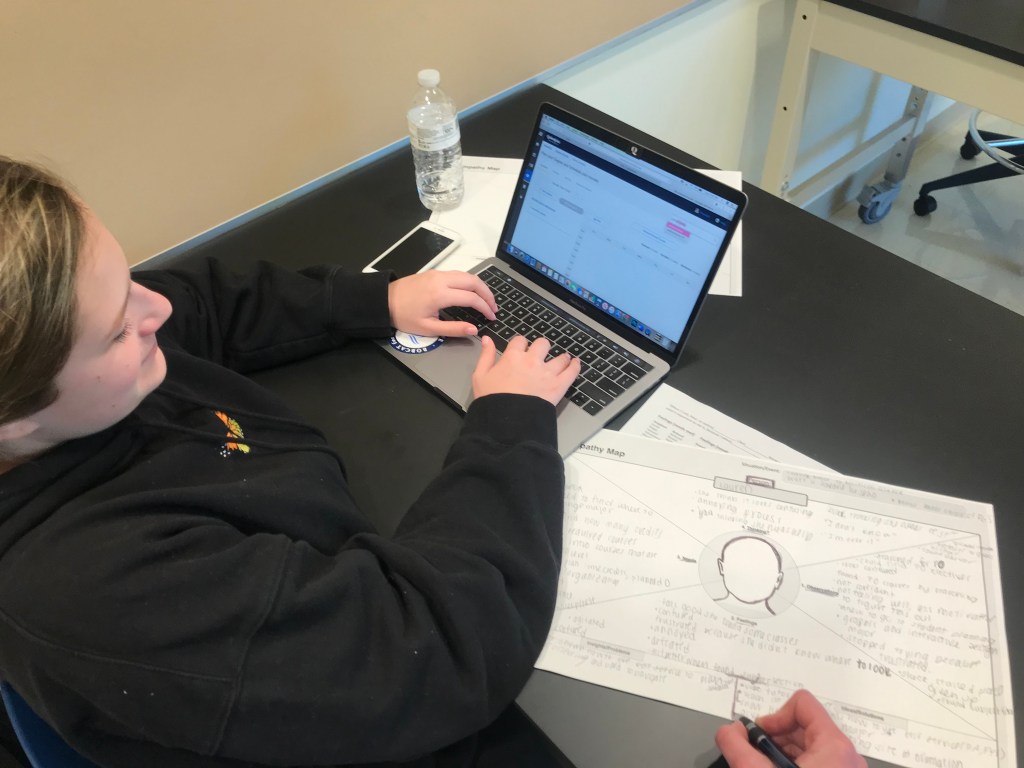
Active listening is a major role of empathy. Active listening is a technique used to give your full attention to a person and to focus on the issue at hand. You have to reserve judgments and comments for this person. You have to withhold advice, no matter how badly your instinct wants to add opinions. You are supporting this person by listening to everything they say about the situation and by soaking up all their feelings. You can ask questions to understand the situation but the goal is to communicate that you comprehend their feelings. In the workplace, you often fill out an empathy map in which you record thoughts, feelings, observations, and needs of the subject in focus. These are used to get enough information to identify all the problems and possible solutions. In the scenario shown below, an empathy map was created for a first-year student trying to create their schedule. It identifies feelings of confusion, frustration and pinpoints several navigation issues within the software. A solution for the navigation issues that occurred when trying to plan classes was to have a tutorial video for all first-year students to use as a reference.
To give more applied examples of empathy, Berkley’s article Six Habits of Highly Empathic People defined habits of highly empathetic people. Some of these include “cultivating curiosity about strangers, discovering commonalities with people, trying to live another person’s life, opening up and listening hard, inspiring mass action and social change and having an ambitious imagination.” All these habits relate to the importance of active listening. To have any of these habits, a person must actively listen to learn more about people they do not know, listening hard, inspiring social change, and being imaginative. To do any of these activities, you must be able to listen and identify problems and issues that people have, without judgment. This article ultimately explains that in order to be an empathic person it is imperative you actively listen to others.
A lot of the possible benefits of empathy were described in the article, Unstuck — Empathy: The single best way to get unstuck. Some of the main benefits include, “relieving alienation, reducing negative thoughts people have about themselves and limiting anxiety.” In addition to these, empathy encourages cooperation and resilience since people feel more connected to one another. When showing empathy to others it also helps us build trust and cooperation. Empathy gives us an understanding of another person and allows people to be more genuine with each other. This article demonstrates the importance of empathy in the workplace and outside the workplace. Empathy clearly should be practiced everywhere in life, since it can make people less anxious and confident, this can inspire a better work-life, home-life and social-life.
In contrast to using Design Thinking to create apps or other products, this can also apply to Doctors and Nurses. In the article Design Thinking for Doctors and Nurses by Amitha Kalaichandra she explains the importance of empathy in a hospital, “empathy for the user, in this case, a patient, doctor or other health care provider; the involvement of an interdisciplinary team; and rapid prototyping of the idea. To develop a truly useful product, a comprehensive understanding of the problem the innovation aims to solve is paramount.” This brings the medical field back to the primary goal of using empathy to improve the patient, doctor and health care provider system for a better experience. Empathy can be used to solve issues in the corporate world as well as the medical field which further emphasizes its importance. Empathy should be adopted in all fields since it can solve a plethora of issues universally.
In the “Brene Brown on Empathy” video, she emphasizes how empathy fuels connection. This is an important piece of wisdom that shows how Design Thinking and empathy is appropriate and can be universally adopted. It would be appropriate to use Design Thinking and Empathy in any professional field. Overall, these processes apply from graphic designers to doctors and medical professionals. In retrospect, the excerpt presented from “The Most Inspirational Video- Empathy” presents a quote from David Henry Thoreau that concludes the importance of empathy perfectly, “Could a greater miracle take place than for us to look through each other’s eyes for an instant.” This statement perfectly reflects how empathy should be practiced among all people.
Design Thinking is a human-centered process that has many methods and is not linear throughout the different steps. In the Article, What is Design Thinking and Why Is It So Popular, Rikke Dam and Teo Siang define Design Thinking as, “Design Thinking is an iterative process in which we seek to understand the user, challenge assumptions, and redefine problems in an attempt to identify alternative strategies and solutions that might not be instantly apparent with our initial level of understanding.” This process focuses on failure and refinement to create different products and services. This allows designers, artists, and anyone to create the best product for clients. We must delve deep into the target audiences lives and take the time to fully understand them and not create anything based on our own opinions. Often our opinions are not accurate understandings of the target audience. Now I will take you through the process as I understand it.
Primarily in the emphasize phase, one should focus on observing, engaging and immersion. As stated in the, An Introduction to Design Thinking PROCESS GUIDE by Hasso Plattner, “To create meaningful innovations, you need to know your users and care about their lives.” One can discover more about their target audience through qualitative and quantitative data collection, focusing on feelings and needs and identifying problem and pain points. This can be accomplished through numerous channels, such as research, interviews, surveys, shadowing, documentaries, journals, and body language. It is also imperative to drop assumptions and judgments about clients or the target group here. You need to take the time to know your users and care about what occurs in their lives and what problems you could solve for them. If you do not take the time to do get to know your target audience, your creation may not be useful to this group at all.
Once you understand and empathize with your target group, the next stage is to define the problem. Define is the second phase in which one has to unpack and gain insight into the given problem set and establish what the target group needs. This can be done through analysis, the five whys, different personas, (re)definition of the problem, problem statements and using the “how might we..” mindset to find the best solution for the giving problem at hand. In this stage, there is a lot of ambiguity, uncertainty, and need for time and space. This stage needs a lot of time since it is very important to the result. Time needs to be dedicated here to see problems from different perspectives, especially different consumer perspectives. If you do not consider the consumer in this phase it can be fatal to the success of the project.
After you define the problem, it is time to generate ideas for the problems you have discovered. In the third phase, ideate, it is best to have a higher quantity of ideas that you generate, you must not focus on the quality of these ideas. The goal is to get the highest volume of ideas you can. You want to ensure diversity, and that every voice at the table is heard, and that no judgment is passed in the idea creation space. It is also key that novelty is prioritized over relevance, and at this sweet spot, idea generation will be optimized.
In the fourth phase, prototype, you have to explore, inspire and converse. Through this phase, one cannot be scared to encounter failure and it is necessary to embrace it to have the best ideas and creative solutions. Through this phase, there will also be a lot of iteration and possibly revisiting other phases. Possible forms are paper prototypes, animatics, comprehensives, low fidelity, high fidelity, wireframes, walkthroughs, and maquettes.
In the final phase, the test phase, one needs to REFINE, LEARN, and SOLVE. In creative professions, one needs to be comfortable with the fact that something’s are never finished (but somethings are). In both types of work that are continuous or defined, reflection and learning are vital in both. Key points in the test phase are screenings, launches, publishing, printing, debugging, shipping, promoting, releasing and beta.
As a marketing major, I am in the School of Business, not the School of Communications so I was not introduced to the concept of “Design Thinking” until my senior year when I took GID101 as a recommendation from my friend who is a graphic design major. Through our discussions in class and the amazing Ted Talks from Tim Brown and David Kelley, I truly think this is a concept that should be shared through all the different disciplinary schools on campus. This concept would be able to help immensely regardless of your major. It is a building block that should be implanted in everyone’s studies. Since everyone solves problems in their different careers, being able to think creatively to solve different problems for many different kinds of people would be an invaluable skill to have for any field.
In Tim Brown’s Ted Talk, Designers – think big, he introduced a lot of important points, by focusing on one product and just making it “more marketable” did not bring him success. He took a different view on design and started attacking projects with Design Thinking. He brings up the point you have to balance what people want, new technology and financials. It is an important triangular relationship in which you have to balance all factors for success. This brings Design Thinking into a real-world application. He does a tremendous job showing how Design Thinking can be used outside the classroom. Tim Brown’s insights relate to the point that Design Thinking can be used in any field. You have to think holistically and not just objectively. In any field, viewing a problem from multiple angles and different perspectives will bring you the best solution.
In David Kelley’s Ted Talk, How to build your creative confidence, he brings up interesting points about creativity. He flashes back to elementary school. It shows the importance of fostering creativity at a young age. He explains how creativity is limited at a young age out of fear to be judged by classmates If creativity is fostered at the beginning of life and people did not judge each other’s ideas or projects, people may feel more confident in their creativity. People are scared to be judged which inhibits the sharing of a lot of creative ideas. It is important to creative judgment-free environments to foster creativity. If creativity was encouraged at a young age, grown people in the professional world would be more apt to share ideas and this would create better collaboration and possibly generate better solutions for companies.




 Madison's Creative Blog