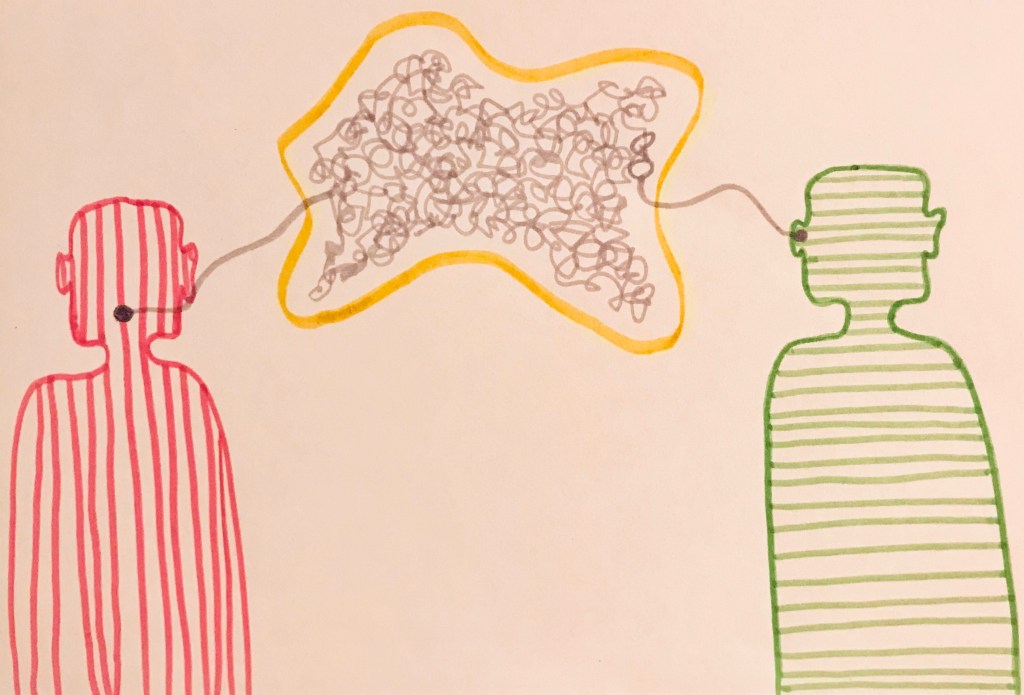
In Design Thinking, empathy is one of the most crucial stages. Empathy is one of the main concerns of design because it is difficult for people to execute. In Berkley’s, What is Empathy? article, it defines empathy as, “Emotion researchers generally define empathy as the ability to sense other people’s emotions, coupled with the ability to imagine what someone else might be thinking or feeling.” In the Empathy article from the Design Thinking Handbook, it explains the importance of empathy by stating, “Empathy is at the heart of design. Without the understanding of what others see, feel, and experience, design is a pointless task.” In design, you have to empathize with people to design effectively. If you do not put yourself in the shoes of others, you cannot see what the group requires. Ultimately, if you cannot determine a group’s needs and desires through empathy, your design or project could be pointless.
It is imperative to connect with your consumer and create a project for them that is impactful. A Design Thinker should start with observing the group that a product, service or experience is being designed for. Next, Design Thinkers should try to engage with the group in focus and immerse themselves in their day to day life. This way one can see how this group operates. Once a designer can understand and immerse themselves and have a context of how these people live, they can identify the desires of these people. Tactics to use for these steps include research, interviews, surveys, shadowing, documentaries, journals, and observing body language.
To summarize, qualitative and quantitative data collection is key to getting the right context in the empathize phase of Design Thinking. Furthermore, establishing feelings and needs of the individuals you are designing for is necessary for success. By immersing yourself you can find problems and pain points that this group needs solved. This provides information to be innovative and find solutions for problems they crave. You must drop all assumptions and judgments you have for the group and discover issues for yourself.
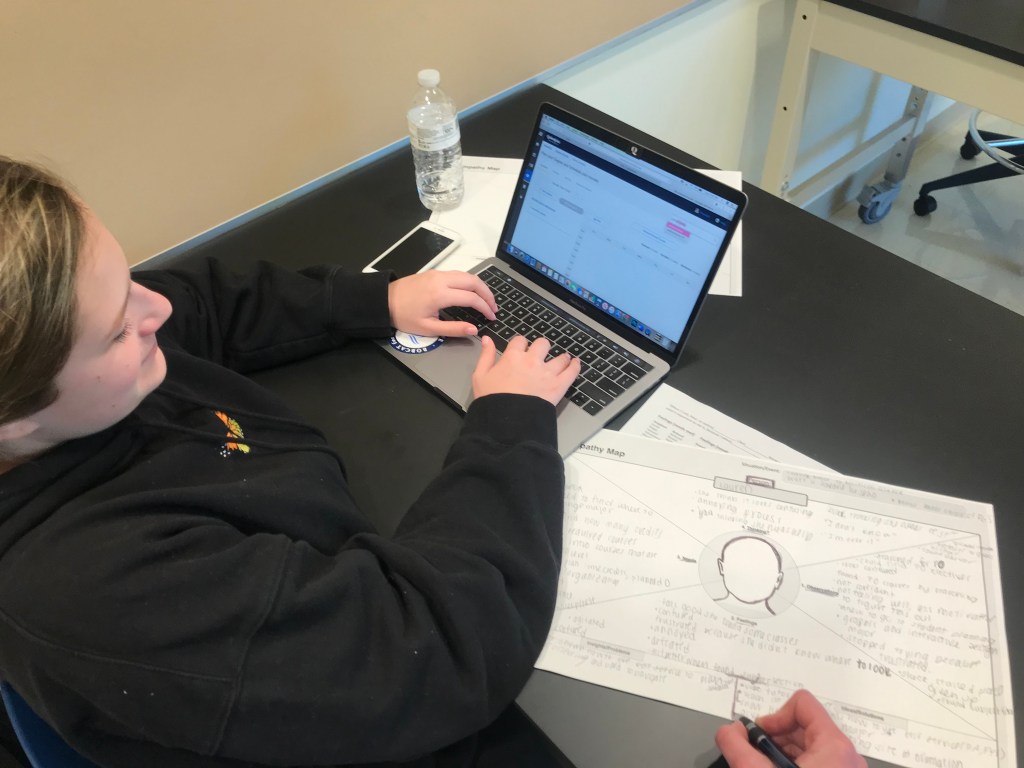
Active listening is a major role of empathy. Active listening is a technique used to give your full attention to a person and to focus on the issue at hand. You have to reserve judgments and comments for this person. You have to withhold advice, no matter how badly your instinct wants to add opinions. You are supporting this person by listening to everything they say about the situation and by soaking up all their feelings. You can ask questions to understand the situation but the goal is to communicate that you comprehend their feelings. In the workplace, you often fill out an empathy map in which you record thoughts, feelings, observations, and needs of the subject in focus. These are used to get enough information to identify all the problems and possible solutions. In the scenario shown below, an empathy map was created for a first-year student trying to create their schedule. It identifies feelings of confusion, frustration and pinpoints several navigation issues within the software. A solution for the navigation issues that occurred when trying to plan classes was to have a tutorial video for all first-year students to use as a reference.
To give more applied examples of empathy, Berkley’s article Six Habits of Highly Empathic People defined habits of highly empathetic people. Some of these include “cultivating curiosity about strangers, discovering commonalities with people, trying to live another person’s life, opening up and listening hard, inspiring mass action and social change and having an ambitious imagination.” All these habits relate to the importance of active listening. To have any of these habits, a person must actively listen to learn more about people they do not know, listening hard, inspiring social change, and being imaginative. To do any of these activities, you must be able to listen and identify problems and issues that people have, without judgment. This article ultimately explains that in order to be an empathic person it is imperative you actively listen to others.
A lot of the possible benefits of empathy were described in the article, Unstuck — Empathy: The single best way to get unstuck. Some of the main benefits include, “relieving alienation, reducing negative thoughts people have about themselves and limiting anxiety.” In addition to these, empathy encourages cooperation and resilience since people feel more connected to one another. When showing empathy to others it also helps us build trust and cooperation. Empathy gives us an understanding of another person and allows people to be more genuine with each other. This article demonstrates the importance of empathy in the workplace and outside the workplace. Empathy clearly should be practiced everywhere in life, since it can make people less anxious and confident, this can inspire a better work-life, home-life and social-life.
In contrast to using Design Thinking to create apps or other products, this can also apply to Doctors and Nurses. In the article Design Thinking for Doctors and Nurses by Amitha Kalaichandra she explains the importance of empathy in a hospital, “empathy for the user, in this case, a patient, doctor or other health care provider; the involvement of an interdisciplinary team; and rapid prototyping of the idea. To develop a truly useful product, a comprehensive understanding of the problem the innovation aims to solve is paramount.” This brings the medical field back to the primary goal of using empathy to improve the patient, doctor and health care provider system for a better experience. Empathy can be used to solve issues in the corporate world as well as the medical field which further emphasizes its importance. Empathy should be adopted in all fields since it can solve a plethora of issues universally.
In the “Brene Brown on Empathy” video, she emphasizes how empathy fuels connection. This is an important piece of wisdom that shows how Design Thinking and empathy is appropriate and can be universally adopted. It would be appropriate to use Design Thinking and Empathy in any professional field. Overall, these processes apply from graphic designers to doctors and medical professionals. In retrospect, the excerpt presented from “The Most Inspirational Video- Empathy” presents a quote from David Henry Thoreau that concludes the importance of empathy perfectly, “Could a greater miracle take place than for us to look through each other’s eyes for an instant.” This statement perfectly reflects how empathy should be practiced among all people.
 Madison's Creative Blog