Storyboarding is a storytelling technique used to communicate a story through different panels. You mustn’t try to tell too complicated a story or a story that is too simple in these panels. There is a balance that needs to be met within the panels on a storyboard. The storyboard structure as seen below is a graphic organizer of illustrations. The order of the storyboard sections shows the sequence of events happening within the story the artist is trying to tell. Even though we are creating these storyboards in class for the first time and it may seem trivial, these are an essential element in the corporate world. Storyboards are heavily used in any graphic design field and advertising. Storyboarding is also extremely important for business presentations, whether it be internal within a company or to clients. To be able to communicate a story to your client or target audience is an essential skill in the graphic design field.
Lynda Barry is an extremely famous cartoonist, author, and teacher. Even though she is famous, Lynda Barry still uses storyboarding as the base of her work, as this is how she tells stories to many different audiences. Her process closely relates to Design Thinking and Ideation, as she describes how she draws through storyboarding with minimal planning. She lets the story flow out naturally to make sure the client understands what the story is. Since we often consume media quickly through platforms such as social media, creative ideas need to be concise and imaginative to be understood and digested. Lynda Barry finds the best way to tell a story is with the least planning and just to tell the story naturally. Lynda Barry explained her process In answering a question about her book, What It Is in an interview with Michael Dean for The Comics Journal, Barry said:
“The realization that the back of the mind can be relied on to create a natural story order. It’s not something I have to try to do, or think too hard about. If I just work every day on a particular project, it seems to begin to form itself if I keep moving my hands while maintaining a certain state of mind.”
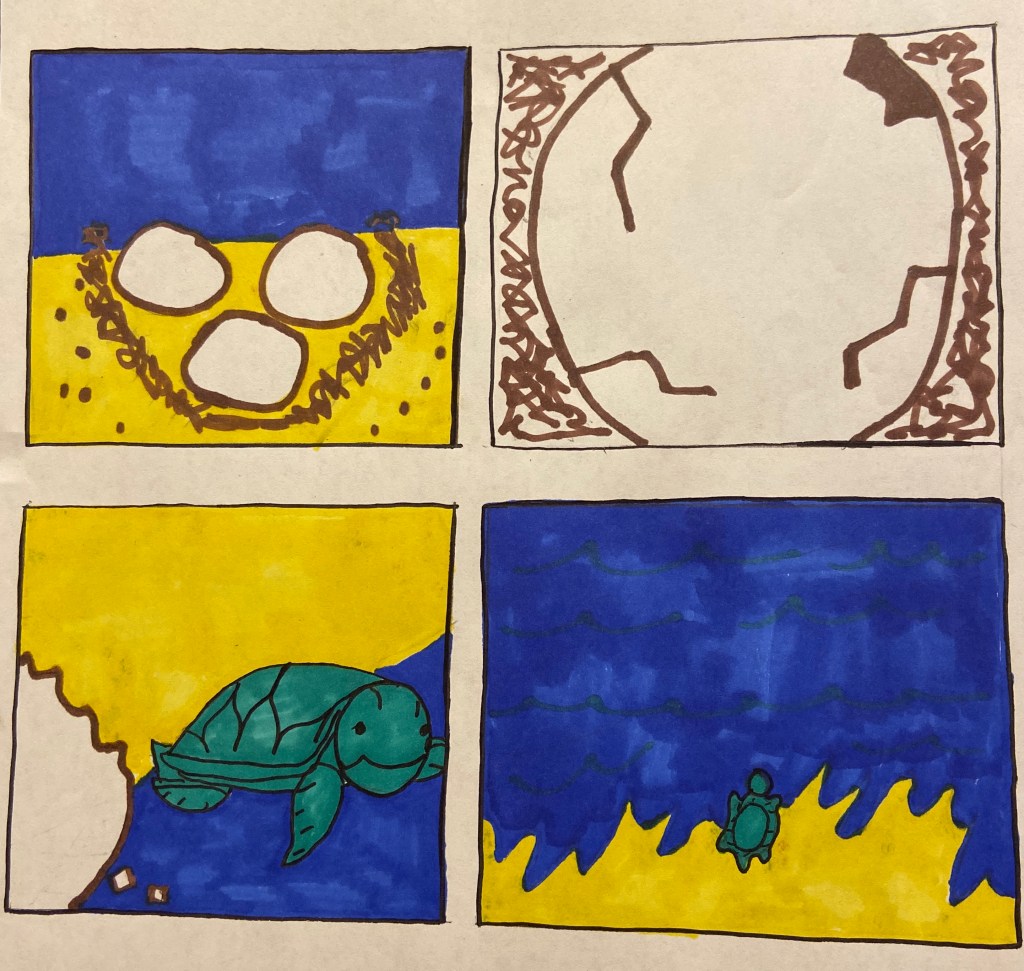
Lynda is using the basics of Design Thinking to create her work which is extremely helpful when creating storyboards. When presenting my storyboards in our class, I found that people did not digest the stories in the same way which I had. I thought my stories were clear and concise. I found out after presenting them to the class that two of my storyboards were too simple to fit in four frames. I had one storyboard that fit well into the four frames we were given (see below) but it was just not creative. If I had thought to create these storyboards from Lynda’s perspective, I may have had a more creative story that was captivating to my audience. Like Design Thinking, you must always have the end-user in mind when creating storyboards, to make sure your work pertains to your target audience.
 Madison's Creative Blog